The question is timing, not whether
Every product that lasts ends up with a design system of some kind. The real question for a startup is when to invest in one, and how much.
Build too early and the system freezes decisions the product has not finished making. Components get designed for screens that will be deleted, and the team spends a sprint maintaining a library instead of finding out what customers want. Build too late and every team rebuilds the same interface slightly differently, until changing a button means finding twelve of them.
Nielsen Norman Group defines a design system as a complete set of standards for managing design at scale, using reusable components and patterns. The phrase that matters for a startup is "at scale". A design system for startups is worth its cost when there is enough scale to manage.
Signs it is still too early
- The product is still looking for its core use case, and whole flows are rebuilt every few weeks.
- One designer, or none, and one or two engineers building the interface.
- Nobody has yet been confused about which version of a component to use, because there is only one of most things.
At this stage a full system slows the team down. Use a well-built component library, make a handful of decisions explicit, and spend the time on the product.
Signs it is already late
- A second designer has joined, or several engineers build UI in parallel.
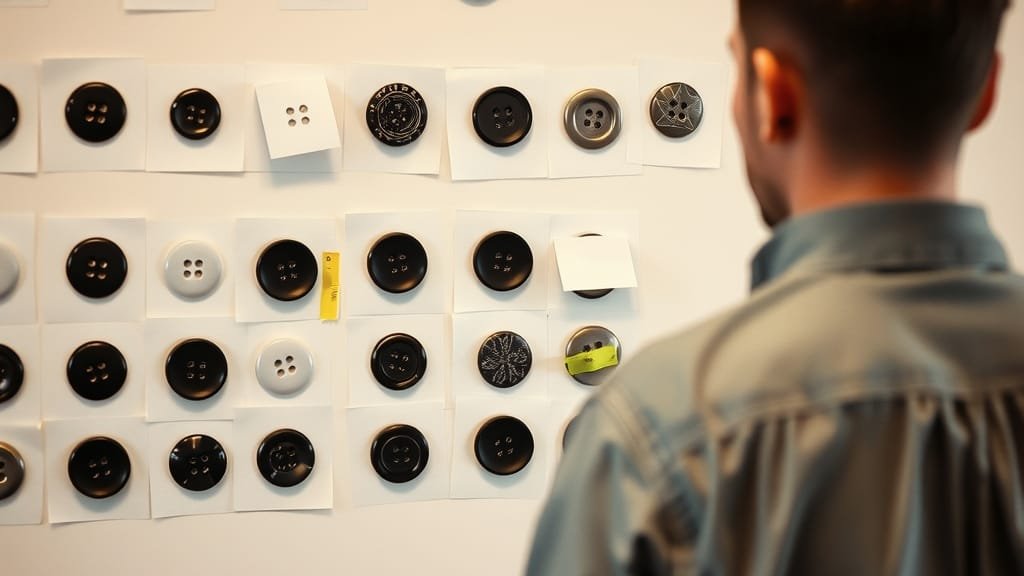
- The same component exists in several versions. On HelloUI, the audit found the same button in a dozen near-identical forms across the product lines, because finding the existing one was slower than writing a new one.
- A small visual change, such as a colour or a corner radius, takes days because nobody knows everywhere it lives.
- Design reviews argue about spacing and colour instead of about the product.
Any two of these and the cost of not having a system is already being paid, just spread across every release.
The smallest system that works
A startup does not need a documentation site and two hundred components. It needs three decisions written down, and the discipline to use them.
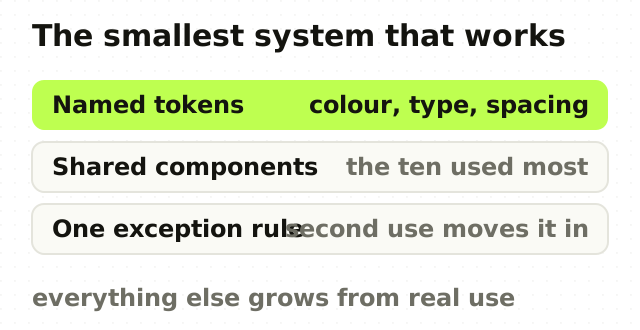
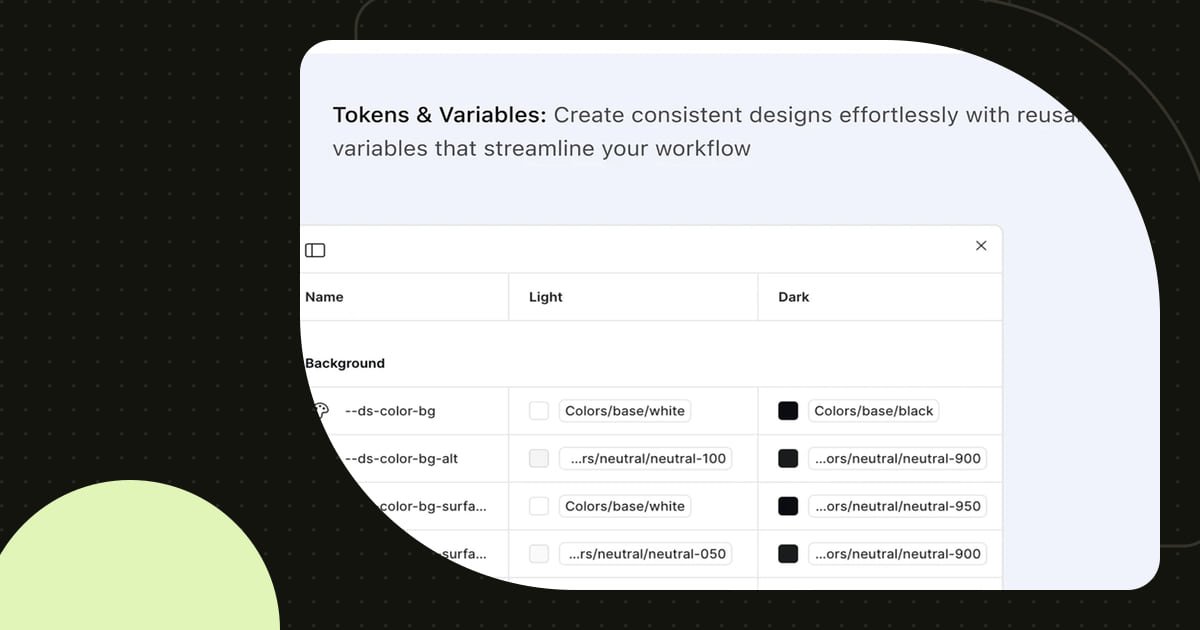
- Named tokens. Colour, type and spacing values with names that describe their purpose, such as text-muted rather than grey-700. The name is where the decision lives, which is the argument in name the decision, not the colour.
- A short set of shared components. The ten or so the product uses most: button, input, select, table, modal, toast, empty state. Each one documented with its real states, not just the default.
- One rule for exceptions. When someone needs something the system does not have, what happens? A simple answer, such as "build it once in the product, and if a second team needs it, it moves into the system", keeps the system growing from real needs instead of guesses.
That is enough to stop drift. Everything else can grow from what the product actually needs.
Build on a library or build your own
For most startups the right answer is to build on an existing component library, such as a headless or unstyled one, and put your own tokens and decisions on top. The library handles accessibility, keyboard behaviour and the hundred small interaction details that are expensive to get right. Your tokens and components handle the parts that make the product yours.
Building from scratch makes sense when the product's core interaction is unusual enough that no library fits, or when you already have the design and engineering capacity to maintain it. For an early team that is rarely true.
Who owns it
A design system without an owner decays. At a startup the owner does not need to be a dedicated team, but it does need to be a named person who reviews additions, keeps the tokens and components in step between design files and code, and says no to one-off variants.
When a system does start to feel slow, the cause is usually not the library. It is usually a product decision nobody made, which is the argument in your design system isn't slow, your product decisions are.
The point
A startup should not build a design system because mature companies have one. It should write down three decisions early, build on a solid component library, and grow a real system at the moment inconsistency starts to cost more than the system would.
Frequently asked questions
- When does a startup need a design system?
- A startup needs a design system when inconsistency starts to cost more than maintaining a system would. Typical signs are a second designer joining, several engineers building interface in parallel, the same component existing in several versions, and small visual changes taking days because nobody knows everywhere a value is used.
- What is the difference between a component library and a design system?
- A component library is a set of reusable interface elements, such as buttons, inputs and tables. A design system is broader: it includes the components, the tokens they are built from, the guidance on when to use each, and the rules for how the system changes. Nielsen Norman Group describes component libraries as one part of a design system.
- Should a startup build its own design system from scratch?
- Most startups should not. Building on an existing component library, and adding your own named tokens and a small set of product components on top, gives accessibility and interaction quality for free. Building from scratch makes sense only when the product's core interaction is unusual or the team can maintain a system long-term.
- What is the minimum viable design system?
- A minimum viable design system has three parts: named tokens for colour, type and spacing; a short set of shared components, each documented with its real states; and one written rule for how a new pattern gets added. That is enough to prevent drift in an early product, and it can grow from there.
- Who should own a design system at a startup?
- A named person should own it, even if it is a part-time responsibility. That person reviews additions, keeps design files and code in step, and turns down one-off variants. Without a clear owner, a design system slowly drifts back into the inconsistency it was created to fix.
Sources
This thinking, applied
Share this