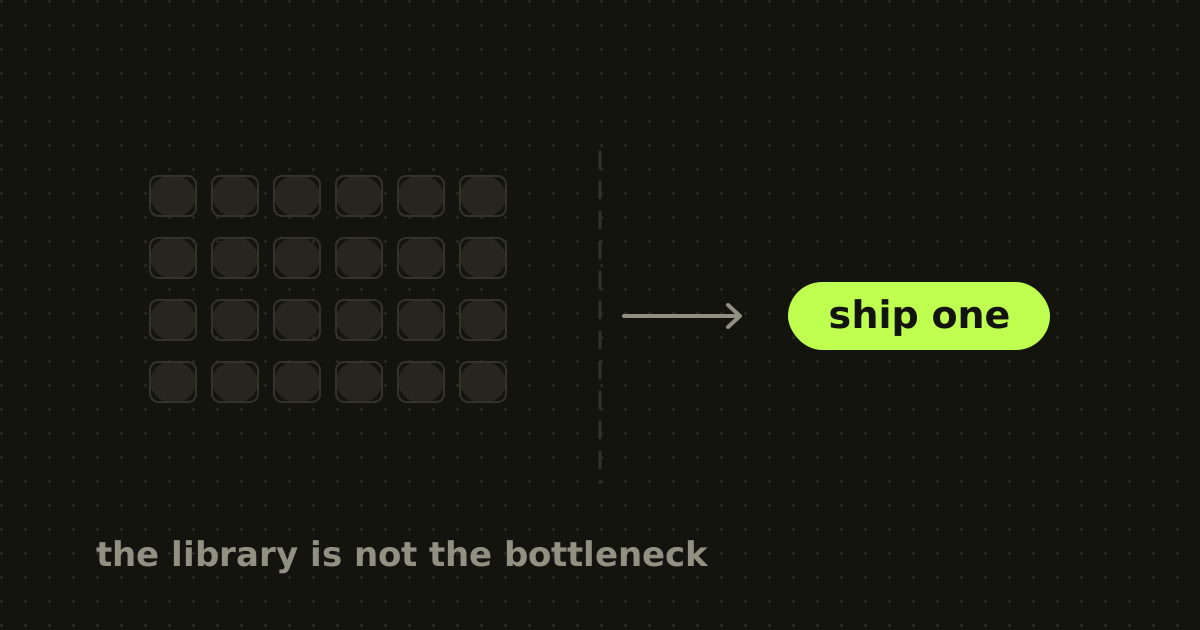
"The design system is slowing us down" is usually a symptom
I have heard versions of this on almost every mature product. We could ship faster without the component library. This screen is unique. The table component does not support what we need. Engineering already built a custom version. The system team takes too long to approve changes.
Sometimes the complaint is correct. A rigid, under-documented or technically poor system can absolutely block product work.
More often the library is being blamed for a different problem. The team has not decided how the product should behave at scale, and the design system is making that disagreement visible.
A component library is not a design system
A component library answers what a button looks like, which variants exist, which spacing token to use, and which code component maps to which design component.
A design system has to answer harder questions. When should a button exist at all. Which action hierarchy is standard across workflows. When is a drawer acceptable instead of navigation. How dense can enterprise tables get before the pattern changes. What is the error model. Which interactions may teams customise. What accessibility behaviour is mandatory. Who decides when the standard is wrong.
Those are governance and product-language decisions. Without them, teams produce exceptions faster than the system can absorb them.
AI makes strong systems more important, not less
Recent design-system work increasingly frames the system as context for AI-assisted production. The logic is straightforward. Humans infer brand, product and code conventions from experience. AI needs those constraints made explicit, so tokens, component names, usage rules, documentation and code mappings become machine-readable context.
This is why the claim that AI will make design systems unnecessary is backwards. AI makes weak systems more expensive, because generation scales inconsistency.
If one designer ignores a token you get one inconsistency. If an agent lacking system context generates twenty pages, you get twenty variations at machine speed.
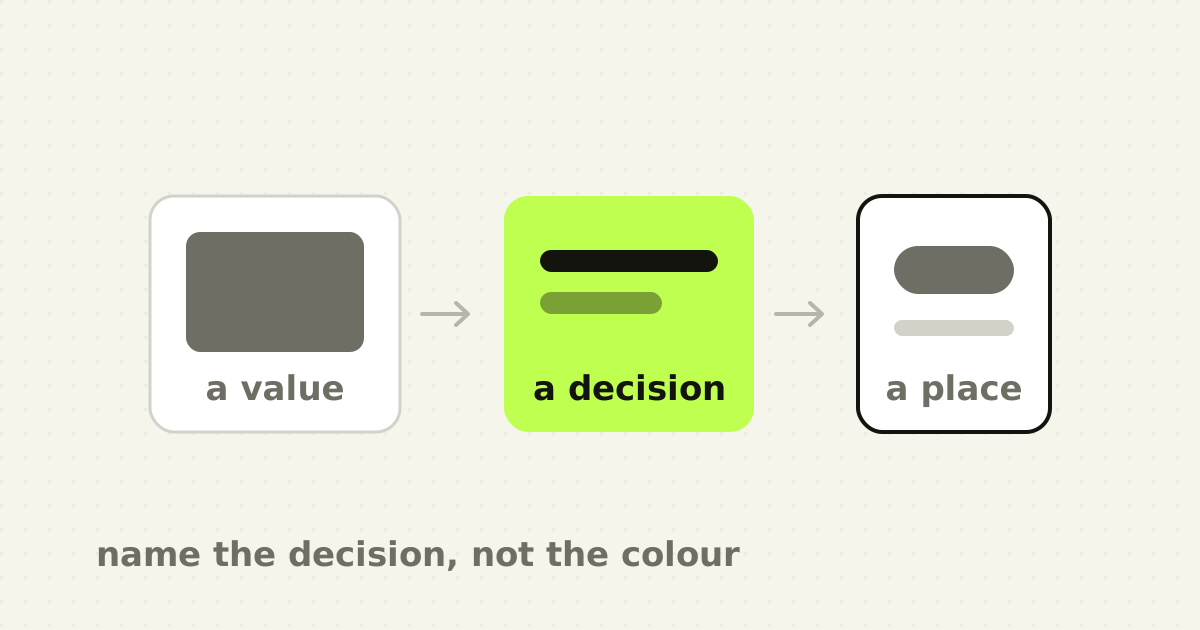
The faster the output, the more valuable the constraints. That is the same argument for naming the decision rather than the value in the token layer.
Four kinds of debt hiding behind the complaint
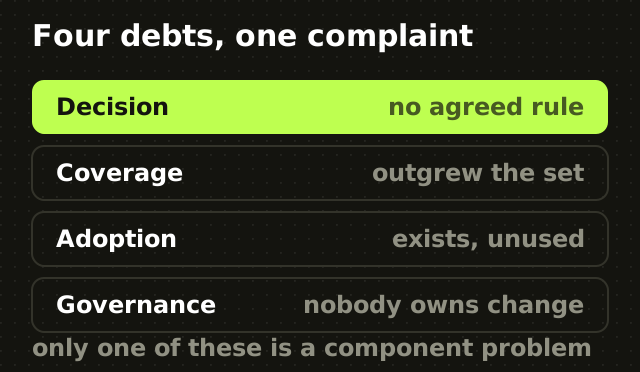
- Decision debt. The team never agreed the product rule. Should destructive actions always require confirmation, or can some be undone instead? Different squads implement different answers because no policy exists. The system cannot encode a decision nobody made. 2. Coverage debt. The product outgrew the component set. The system supports simple tables, and the product now needs bulk actions, pinned columns, inline editing, permissions and fifty-column datasets. This is legitimate system work, and calling every uncovered case special only delays it. 3. Adoption debt. The right pattern exists but teams do not know it, trust it or use it. Documentation, code linkage and discoverability are product features of the system, not afterthoughts. 4. Governance debt. Nobody knows how change happens. Can a product team extend a component? Who reviews it? When does an exception become a pattern? A slow governance process turns a good system into a workaround generator.
Measure decisions, not just component adoption
Adoption is a concrete signal and design tools now report component, style and variable usage. Useful, and it can mislead.
A team can hit ninety-five per cent component adoption and still ship a confusing product if it uses those components to implement inconsistent flows.
I would track four dimensions. Adoption, meaning whether standard components and tokens are used. Correctness, meaning whether they are used as intended. Coverage, meaning what share of common product needs can be solved without a one-off. And decision consistency, meaning whether similar product situations produce similar behaviour across teams.
The fourth is hardest to measure and it is where the user experiences the system. Nobody cares that two screens share a button component if Archive means reversible in one workflow and permanent in another.
The exception process is the real design system
Every design system looks good in its documentation. The test is what happens when a team needs something the system does not cover.
A healthy path runs like this. The product team documents the unmet need and the affected workflow. They check whether an existing pattern solves it without distortion. If not, they propose an extension with real product evidence. The system owner reviews for reuse potential, accessibility and code impact. The team ships the smallest safe extension. Repeated use promotes it into the core. Documentation and code mappings update with the product.
An unhealthy system has two modes: wait weeks for approval, or detach the component. Teams will choose detachment.
Flexible systems can be slower than strict ones
There is a belief that more variants make a system faster because teams can handle more edge cases. Often they make it harder to use.
Every optional property is a decision pushed onto the consuming team. If a card has twelve visual variants, six density modes and independent overrides for every slot, the system has encoded flexibility instead of intent.
A strong system is opinionated about common cases and deliberate about escape hatches. A paved road with documented exits, not an empty field with reusable signposts.
Documentation is not a side deliverable
Good documentation answers when to use a pattern, when not to, its anatomy, behaviour, states, content rules, accessibility, responsiveness, code mapping, examples with real data, known exceptions, and who owns the change process.
That is the context a designer needs, a developer needs, and an AI agent needs. A screenshot of variants is not enough.
The speed audit
When a team says the system is slow, do not debate it. Measure the delay. Take the last ten product tasks that required UI work and classify where the time went.
Find, meaning the team could not locate the right pattern. Understand, meaning documentation did not explain correct use. Fit, meaning the system did not cover the case. Decide, meaning the product team disagreed about expected behaviour. Approve, meaning governance took too long. Implement, meaning design and code diverged. Migrate, meaning legacy surfaces blocked adoption.
Now you know what to fix. If most time sits in Decide, rebuilding components will not help. If it sits in Find, invest in discoverability. If Fit dominates, invest in coverage. If Implement dominates, connect design and code.
AI should consume the system, not invent it
This is the operational model I find most useful. Let AI generate scaffolding, composition, variants and code inside a design language whose rules were decided by humans and validated in product.
The point is not to make AI obey pixels. It is to make AI inherit decisions. That is how a design system becomes leverage rather than documentation overhead.
The point
A design system is supposed to reduce repeated decisions. When it feels slow, look for the decisions that are still being repeated anyway.
It may need more components, better documentation or stronger code integration. It may also be doing exactly what a good system should do: forcing the organisation to confront inconsistency before that inconsistency ships at scale.
Fix the bottleneck that is actually there.
Frequently asked questions
- Why does my design system feel like it slows the team down?
- Usually because it is surfacing decisions the organisation never made. A system can standardise what a button looks like, but it cannot decide whether destructive actions require confirmation or support undo. When that rule does not exist, every team invents one, and the resulting exceptions arrive faster than the system can absorb them.
- What is the difference between a component library and a design system?
- A component library answers what things look like and which code maps to which design element. A design system also answers when a pattern should be used, what the error model is, how dense a table may become, which interactions teams may customise, what accessibility behaviour is mandatory, and who decides when the standard is wrong.
- Will AI make design systems unnecessary?
- The opposite. AI generation scales whatever consistency you have, so weak systems become more expensive rather than less. Tokens, component names, usage rules, documentation and code mappings are the machine-readable context that lets generated pages inherit decisions instead of inventing them twenty times at machine speed.
- How do you measure design system health?
- Beyond component adoption, track correctness, meaning components are used as intended, coverage, meaning what share of product needs can be met without one-offs, and decision consistency, meaning similar situations produce similar behaviour across teams. The last matters most to users, because shared components cannot rescue an action that means different things in different workflows.
Sources
This thinking, applied
Share this