Start with the uncomfortable number
Duolingo reported 58.7 million daily active users in Q2 2026, up 23% year over year, with next-day retention at an all-time high of 84%. More than 10 million users hold a 365-day streak, and over half of daily active learners have a streak of at least seven days, a figure that doubled in a year.
But the number worth studying is a different one. Growth.design's breakdown of Duolingo notes that resurrected users, people coming back after lapsing, are roughly 20% less likely to be retained than brand-new users. Your returning users are your most fragile segment, not your most loyal one. Almost every product team gets this backwards and treats reactivation as a warm audience.
Duolingo's own data supports the point. When the company ran its Streak Revival campaign, letting lapsed learners restore their longest-ever streak by completing three lessons, 15.4 million people took it, including nearly 8 million who had no active streak at all when it began. Note the design: three lessons, not thirty. The bar to re-entry was deliberately low.
Principle one: leave the loop open
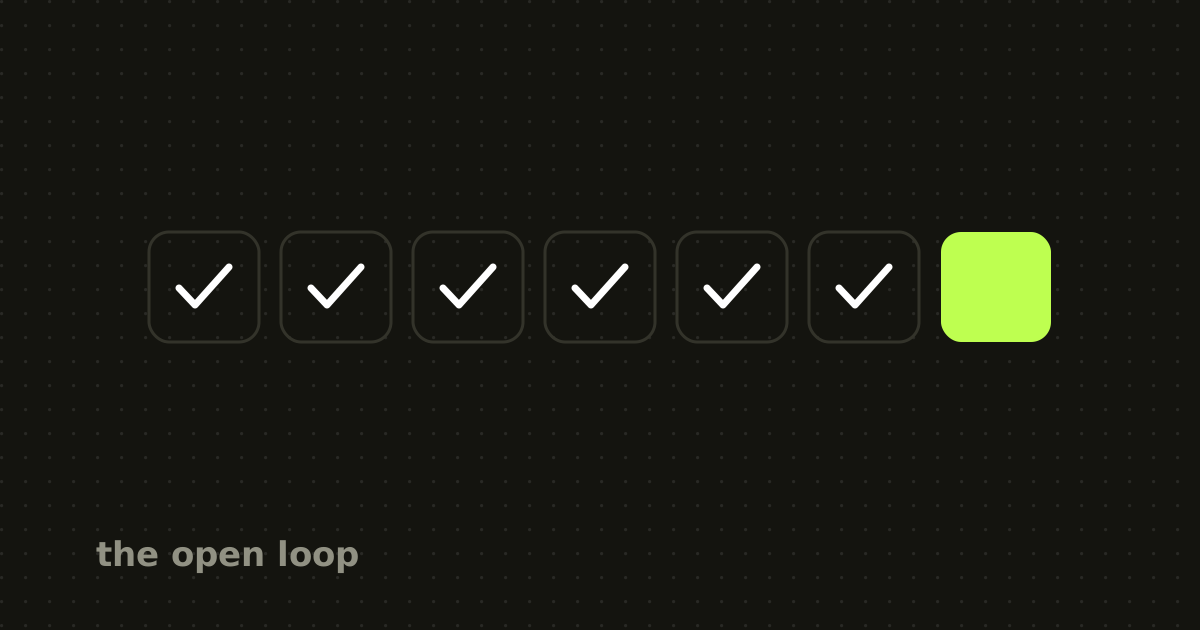
The Zeigarnik effect is the tendency to remember and feel pulled toward tasks that are incomplete. It is the reason a progress bar at 80% is more motivating than one at 0%, and the reason a six-day streak with a blank seventh cell creates a specific, low-grade itch.
Duolingo uses this everywhere: partial progress rings, lesson paths that visibly continue past where you stopped, streak counters that are always one day from breaking. The open state is doing the work, not the reward.
This transfers cleanly to B2B. An onboarding checklist at 4 of 6 outperforms a generic start button. A dashboard showing two connected data sources and three greyed-out ones pulls harder than an empty state with a vague call to action. The trick is that the incompleteness has to be visible and specific, not implied. The same argument shows up from the other direction in an onboarding rebuild for a VPN product, where the first screen decided everything that followed.
Principle two: ask for investment immediately after the reward
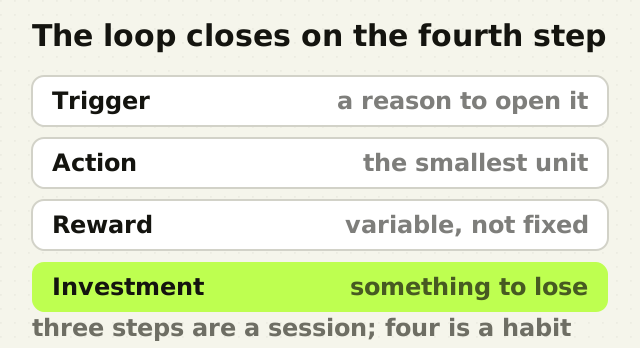
This is the sharpest finding in Growth.design's analysis. Duolingo's wager step, where the app invites you to bet the gems you have just earned on maintaining your streak, increased day-7 retention by 14%.
The mechanism is sunk cost combined with the endowment effect. You have just been handed something. It feels like yours. Committing it forward costs you nothing in cash but creates a real psychological stake in tomorrow.
The order matters more than the mechanic. Ask for commitment before the reward and it reads as a toll. Ask immediately after, while the good feeling is still live, and it reads as an opportunity. Product teams routinely get this inverted, putting the plan selector before the first moment of value rather than fifteen seconds after it.
In enterprise software the equivalent of the wager is any lightweight forward commitment: scheduling the next review, inviting one teammate, naming the workspace, setting a target. Place those requests on the far side of the first real win, never in front of it.
Principle three: match difficulty to the lifecycle stage
Growth.design flags a subtle failure in Duolingo's reactivation flow: recommending advanced features, such as podcasts, to users who are returning after a lapse or are new to the language. It is a segmentation error, and it lands on exactly the segment that can least afford friction.
The fix Duolingo applies elsewhere is to reduce difficulty on reactivation. Returning users get an easier lesson, not a harder one. They are being sold confidence, not challenge.
Apply that to your own resurrection emails. The lapsed user does not want your new advanced feature. They want a two-minute path back to the thing that worked for them the first time. When I worked on retention for an EdTech learning platform, the single biggest win was making the re-entry lesson easier than the one the student had abandoned.
Principle four: let the session end
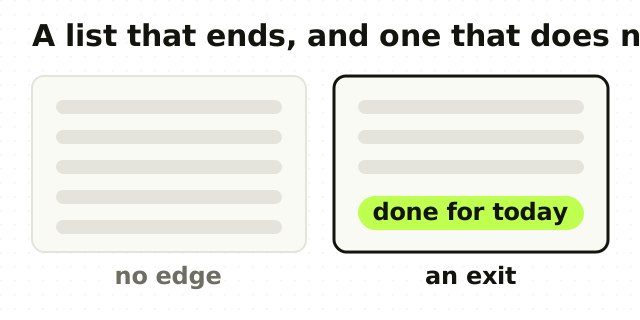
Here is the counterintuitive one. Duolingo gives users a clear daily finish line and a completion signal when they cross it. There is a point at which the product tells you that you are done.
Most teams treat this as leaving engagement on the table. It is the opposite. A product with no natural exit point produces guilt, then avoidance, then churn. A session that ends cleanly produces the small satisfaction that makes tomorrow's return feel easy.
The same logic covers notifications. Growth.design highlights Duolingo's practice of automatically throttling messaging to users who have gone quiet. Continuing to push someone who has disengaged does not win them back, it burns the channel and makes future resurrection harder. Restraint here is an investment.
Where this tips into a dark pattern
Two of the principles in the teardown are warnings rather than tactics.
The first is user shaming, the guilt-based microcopy and confirmshaming that gamified products drift into. A decline option worded as an admission of failure is not persuasion, it is a small insult, and it trades long-term trust for a short-term click.
The second is the streak itself. Growth.design is explicit that losing a streak is a significant reason people quit entirely. A mechanic strong enough to bring someone back 365 days running is strong enough to end the relationship the day it breaks. That is why streak repair, freezes and revival campaigns exist. If you build a loss-averse mechanic, you owe your users a recovery path.
What to actually do this quarter
- Find your open loop and make it visible. Pick the single most valuable incomplete state in your product and surface it with specificity: 2 of 5 sources connected, not finish setup.
- Move your commitment ask to after the first win. Audit where you request a card, an invite, a calendar slot. If it sits before the user's first genuine success, move it behind.
- Split reactivation from acquisition. Stop sending lapsed users your newest features. Send them the shortest route back to the value they already understood.
- Give the day an ending. Define what done for now means in your product and say so explicitly. Then stop messaging.
- Build the recovery path before the loss mechanic. If you ship streaks, badges or tiers, ship the repair flow in the same release.
- Delete every guilt-worded decline option. They are measurable in the short term and corrosive in the long term.
The point
Duolingo's retention is not the product of a clever counter. It is the product of correct ordering: reward before investment, ease before challenge, completion before the next ask, and silence when someone has stopped listening. Growth.design's teardown is useful precisely because it separates the sequence from the skin.
Copy the sequence. Leave the owl alone. If you want the same thinking applied to your own product, that is most of what happens in a design sprint with me.
Frequently asked questions
- What is the Zeigarnik effect in UX design?
- The Zeigarnik effect is the tendency to remember and feel drawn back to tasks that are unfinished. In UX it explains why progress bars, partial onboarding checklists and incomplete streaks pull users back. The effect only works when the incompleteness is visible and specific, so a checklist showing 4 of 6 outperforms a vague prompt to finish setup.
- Why do streaks improve user retention?
- Streaks combine the Zeigarnik effect with loss aversion. Each completed day raises the value of the run and increases what a user stands to lose by missing one. That is powerful, but it cuts both ways: Growth.design notes that losing a streak is a common reason people abandon an app entirely, which is why streak freezes and revival flows exist.
- Are returning users easier to retain than new users?
- No. Growth.design's Duolingo analysis found resurrected users are roughly 20% less likely to be retained than brand-new users. Someone returning after a lapse has already demonstrated they will leave, and they arrive with less momentum. Treat reactivation as the most fragile moment in the lifecycle, not as a warm audience, and lower the difficulty of re-entry.
- When should a product ask users to commit or upgrade?
- Immediately after a reward, not before it. Duolingo's wager step, which asks users to stake gems they have just earned, raised day-7 retention by 14%. Asking before a user's first genuine win reads as a toll; asking seconds afterwards reads as an opportunity, because the endowment effect makes the reward feel like something already theirs.
- Does gamification work for B2B and enterprise software?
- The mechanics transfer, the aesthetics do not. Badges and mascots rarely suit enterprise tools, but the underlying sequencing does: visible incomplete states, commitment requests placed after a first success, easier re-entry for lapsed users, and clear session endings. Apply the ordering rather than the surface treatment.
- What is an exit point in product design?
- An exit point is an explicit signal that a user has finished for now. Duolingo marks the daily goal as complete rather than offering an endless list. Products without exit points produce guilt, then avoidance, then churn. Defining what done looks like, and then stopping notifications, makes the next return feel easy rather than obligatory.
Sources
This thinking, applied
Share this